
Academic Staff

May 14, 2026, 1:52 a.m.
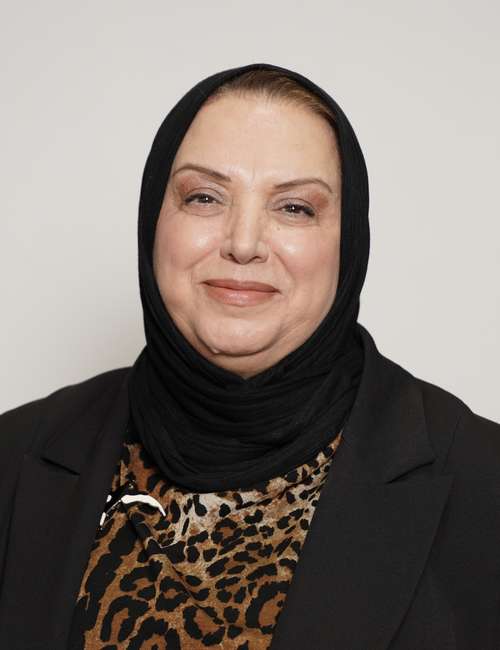
Ahlam Mohammed Taher Saleem (PhD) Head of Dept.
None
Professor in Curriculum and Instruction

Special Education
College of Basic Education
University of Duhok

  • PhD in Curriculum and Instruction, Faculty of Educational and Psychological Sciences, World Islamic Sciences and Education University, Jordan, 2014.
  • MA in Curriculum and Instruction, Faculty of Humanities and Psychology, Amman Arab University, Jordan, 2011.
  • BA in English Literature, Faculty of Arts, Al-Mustansiriya University, 2001.

The academic journey is an ongoing process requiring continuous development of expertise and knowledge. In this context, this educational journey began in 2014, specializing in "Curriculum and Instruction," a pivotal field concerned with developing the educational process and methods of content delivery.

The first phase, which commenced in 2014, focused on teaching undergraduate students. This role served as a foundational stage in honing teaching skills, equipping students with the necessary theoretical and practical groundwork for curriculum design and the implementation of effective teaching strategies. With the arrival of 2020, the academic path underwent a significant transformation with the commencement of teaching master's students within the same specialization. This transition reflects a deepening of experience and an expansion of research interests, as working with graduate students demands a deeper level of critical analysis and specialized research into advanced methodological issues.

This continuity from 2014 until now indicates a commitment to the academic role, while the progression from teaching bachelor's degrees to master's degrees highlights the natural development and accumulated experience in the field of curricula and teaching methods, emphasizing the ability to meet the educational needs of different university levels and guide specialized scientific research.

Research

Research in special education and teaching methodologies represents a vital and fundamental intersection in the development of contemporary educational practices. The aim of this dual discipline is to find innovative methodological solutions that ensure the highest levels of inclusion and academic achievement for students with special needs. Special education requires the application of adapted teaching strategies specifically designed to meet the vast diversity of abilities and cognitive styles, presenting both a challenge and an opportunity for researchers to innovate and experiment with flexible and effective teaching methods.

Research in this field focuses on several key areas, most notably: designing modified curricula, developing diagnostic assessment methods capable of accurately identifying strengths and weaknesses, and evaluating the effectiveness of early educational interventions. It also includes in-depth research into innovative teaching methods, such as multisensory teaching, student-centered learning, and the use of assistive technology to enhance students' access to educational content. This research orientation towards enriching teaching methods in the context of special education is a commitment to promoting educational equity, and contributes directly to building a knowledge base that supports teachers and decision-makers to improve the quality of services provided to this important segment of the educational community.

Academic supervision is a pivotal responsibility that contributes to building the next generation of researchers and specialists. This supervisory journey began in 2016, with undergraduate students being guided in their graduation projects and initial research from 2016 to 2020. This role focused on establishing fundamental research skills and applying theoretical knowledge in the field of "Curriculum and Instruction and Special Education," paving the way for specialists capable of analyzing and developing educational processes.

In 2020, the supervisory track underwent a qualitative shift towards guiding master's student research, a role that continues to this day. This transition signifies a deepening of specialization and responsibility, as supervising master's theses requires guiding original and complex research at the vital intersection of modern curricula and instruction and their applications in the field of special education. This advanced supervision focuses on issues such as developing adapted curricula, evaluating the effectiveness of modified teaching strategies, and researching educational inclusion tools, reflecting a commitment to supporting high-quality research that serves the special education and graduate studies sectors.

This chronological and qualitative progression in supervision, from foundational guidance for undergraduates to specialized research for master's students, underscores the accumulated experience and depth of knowledge in the fields of curricula, teaching methods, and special education, and highlights the effective contribution to enriching scientific research in these precise fields.