
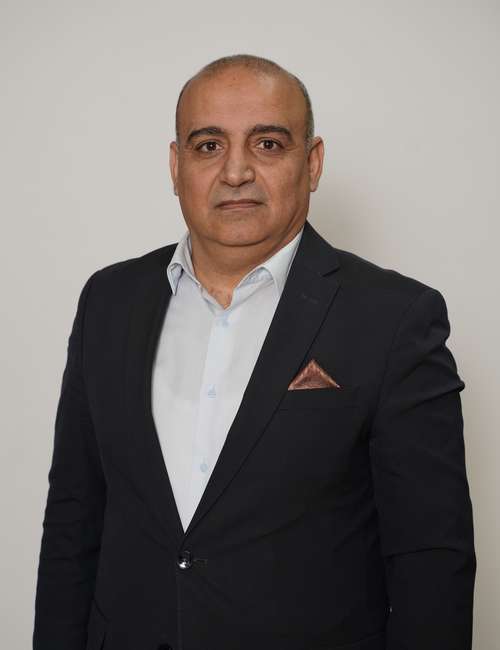
Academic Staff

May 24, 2026, 11:35 p.m.
Abdulqader Eskander Hussein (PhD) Head of Department
None
Assistant Professor in Molecular Biology

Science
College of Basic Education
University of Duhok

PhD in Molecular Biology, College of Science, University of Duhok, 2020.

MA in Biology, College of Education, University of Mosul, 2001.

BA, Biology, University of Mosul, College of Education,1999.

From 2002 to 2008, I taught in the Department of Biology at the University of Mosul, where I delivered courses in genetics and cell biology. After transferring to the University of Duhok, I continued teaching a range of subjects, including Genetic Theory for third-year students and Practical Genetics and Practical Cell Biology, with an emphasis on key laboratory techniques and analytical skills. I also taught Micro-technique to second-year students, providing essential training in specimen preparation and microscopy. Through these courses, I have consistently supported students in building strong theoretical foundations and practical competencies in the biological sciences.

Research

  1. Ali, A. M., Zeber, S. J., Hussein, A. E., & Sulaiman, R. S. (2024). Identification of some variety of plum varieties (Prunus domestica) using SRAP markers in Duhok region- Kurdistan/ Iraq. Cuest.fisioter., 54(4), 7467-7473.
  2. Sinjare, D. Y. K., Jubrael, J. M. S., & Hussein, A. E. (2023). DNA barcoding of pomegranate (Punica granatum L.) cultivars in Duhok province- Kurdistan region/ Iraq using 18S–28S rRNA and ITS region. Bulletin of University of Agricultural Sciences and Veterinary Medicine Cluj-Napoca. Horticulture, 80(2), 80-89.
  3. Hussein, A. E., & Jubrael, J. M. S. (2021). AFLP marker in genetic diversity assessment of fig (Ficus carica L.) populations in Kurdistan region – Iraq. Iraqi Journal of Agricultural Sciences, 52(4), 859-867.
  4. Hussein, A. E., & Jubrael, J. M. S. (2020). SSR markers in genetic diversity assessment of fig Ficus carica L. populations in Kurdistan region – Iraq. Science Journal of University of Zakho, 8(4), 123-130.
  5. Abdul-kadir, I. (2007). Study of some vegetative and production traits in variegated leaves mutants in cotton (G. h.) 3rd mutated generation. Journal of Education and Science, 19(1), 85-94.
  6. Mohammad Ali, M. S., & Abdulkadir, I. (2007). Study of morphological, productivity and technological traits of lint in green lint mutants of cotton plants. Journal of Education and Science, 20(2), 334-341.
  7. Mohammad Ali, M. S., & Abdulkadir, I. (2007). Study of yield and lint traits in variegated mutants of cotton plant: 3rd mutated generation. Journal of Education and Science, 19(3), 59-67.
  8. Abdul-kadir, I., & Mohammad Ali, M. S. (2006). Determination of morphological, productivity and technical differences in MC2 and MC3 variegated leaves mutants in cotton (G. h.) 2nd mutated generation. Journal of Education and Science, 18(3), 108-118.
  9. Mohammad Ali, M. S., & Abdul-kadir, I. (2005). Effect of different doses of gamma radiation on yield and it's components for two varieties of cotton. Journal of Al-Rafidain Science, 16(6), 71-84.
  10. Mohammad Ali, M. S., & Abdul-kadir, I. (2004). Effect of colchicine on yield and it's components for two varieties of cotton. Journal of Al-Rafedaine Science, 15(5), 93-103.
  11. Mohammad Ali, M. S., & Abdul-kadir, I. (2004). Effects of period of treatment with colchicine in qualitative traits of two hirsutam cotton. Journal of Education and Science, 16(2).
  12. Mohammad Ali, M. S., & Abdul-kadir, I. (2004). Study of response of two cotton cultivars, Ashor and Coker310, to different doses of gamma radiation. Journal of Al-Rafidain Science, 15(5), 144-154.
  13. Mohammad Ali, M. S., & Abdul-kadir, I. (2002). Genetical study on mosaic leaves in cotton plant-M1. Journal of Education and Science, 14(1), 75-84.

My research interests focus on genetics and molecular biology, fields that together explain how genetic information is organized, expressed, and regulated within living systems. I am interested in how variations in DNA and molecular mechanisms of gene expression shape biological traits and influence health and disease. Advances in genome sequencing, gene editing, and molecular analysis offer powerful tools to explore these questions with increasing precision. Through this research, I hope to contribute to a deeper understanding of the molecular.

Since 2005, I have supervised numerous undergraduate research projects in molecular biology and genetics, complementing my teaching duties. My supervision focuses on guiding students through research design, laboratory work, data analysis, and scientific writing. Through this long-term mentorship, I aim to strengthen students’ critical thinking and technical skills while fostering their interest in scientific inquiry. My sustained commitment reflects my dedication to supporting students’ academic development and preparing them for future careers in the biological sciences.