Academic Staff

May 14, 2026, 2:26 a.m.
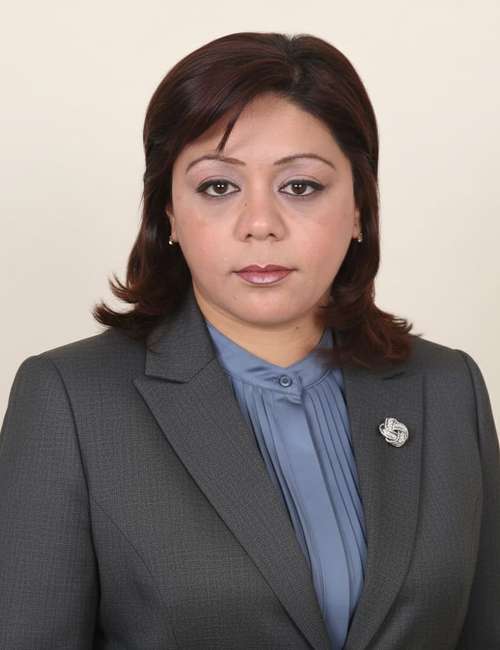
Huda Mohamed Saleh Othman (Master)
None
Lecturer in English Literature –Novel

English Language
College of Basic Education
University of Duhok

  • MA in English Literature –Novel, Dept. of English Language and Literature, Mosul University, 2001.
  • BA in English Language and Literature, Mosul University, 1997.

I have been a dedicated lecturer of English literature since 2001-2002, inspiring students through her passion for literary studies. With a focus on the novel, drama, and literary criticism, I attempt to bring literature to life in the classroom, fostering a deep appreciation for storytelling and critical thinking.

Beyond teaching, I am an accomplished play director, directing over 10 English plays at the English Department. My work in theater reflects my commitment to creativity and collaboration, enriching the academic and cultural environment for students and colleagues.

Research

Paralysis in Joyce’s The Dead and Eliot’s The Love Song of J. Alfred Prufrock (Journal of Uod Vol. 9, No. 2 PP. 10-14 2006)

Alienatin in Sabri Silevani’s Mariama (J. Duhok Univ.., Vol. 11, No.2, pp 1-9, 2008)

Social conflict in Khaled Husseini’s The Kite Runner (Kirkuk University Journal of Humanities, Vol. 17, No.2, 2022)

Polyphony in Sabri Silevani’s The Door to the World (Journal of UoD Vol. 26 No. 2 (2023): Section: Humanities and Social Science / Humanities and Social Sciences)

A Lacanian Analysis of Orhan Pamuk’s The Red Haired Woman (Vol. 12 No. 4 (2024): October-December/ Humanities Journal of University of Zakho)

Distorted Identity in Ahmed Sadaawi’s Frankenstein in Baghdad (Majapahit Journal of English Studies, Vol.3, No.1, 2025)

An Analysis of the Concept of Identity Crisis in Ali Bader’s The Tobacco Keeper (The International Journal on Humanities and Social Sciences, Vol. 29, 2022)

My research interrogates the English novel through the dual lenses of feminism and postcolonialism, focusing on how these intersecting forces shape narrative voice, character agency, and the very structures of the genre. I am particularly interested in works from the 19th century to the contemporary period, examining how female protagonists navigate and subvert the patriarchal and imperial frameworks that often confine them. This involves recovering marginalized voices, analyzing the politics of representation, and tracing the complex ways in which gender and colonial power dynamics are encoded within—and challenged by—the novelistic form.

My role as a supervisor for fourth-stage research projects has been a deeply rewarding endeavor, allowing me to guide students through the complexities of diverse literary genres. I have mentored scholars in formulating robust critical frameworks for analyzing everything from the intricate social tapestries of Victorian realism to the fragmented narratives of postmodernism and the potent voices within postcolonial and diasporic literature. This process involves a collaborative partnership, where I assist students in refining their research questions, honing their analytical voice, and situating their original insights within ongoing critical conversations, ultimately fostering their development into independent and sophisticated literary critics.